
Offline poker · adults 21+

Offline poker, hosted after dark

Velvetand Cinder is an independent Australian restaurant and offline poker information website for adults aged 21 and over. Here, Texas Hold’em is experienced in person around real poker tables, where dining, conversation and a considered card room atmosphere share the same after-dark setting.

Real tables, real companyCards in hand, shared etiquette and face-to-face conversation keep the focus on a calm social rhythm.
Restaurant firstOffline poker sits within dining and hospitality, rather than apart from the room around it.

The evening, in sequence

A restaurant poker evening, in sequence

There is no rush to turn the room into something else. A Velvetand Cinder evening keeps the familiar pleasures of restaurant dining close, then lets the table gather around a hosted format with its own clear, unhurried rhythm.

  1. 01

    Settle into the room

    Guests arrive into a restaurant-led atmosphere where a table, conversation, food and shared anticipation establish the tone. The room is designed to feel composed rather than competitive: a place to take in the setting, reconnect with the people beside you and let the evening find its pace through hospitality.

  2. 02

    Take a place at the poker table

    Offline poker happens around real poker tables. Cards, seating order and poker chips make the shared mechanics visible, while a dealer-led structure gives participants a clear point of reference as a hand progresses. The chips are participation props that help the table follow the format together, not a reason to shift attention away from the people in the room.

  3. 03

    Let the table conversation continue

    Between hands, the social evening remains open. Guests can talk through a decision, return to dining conversation or simply take in the card room atmosphere. Measured conversation and respect for the shared space allow the table to feel welcoming for those who know Texas Hold’em well and those meeting the format in person for the first time.

At the table

Texas Hold’em, made tangible

Texas Hold’em is a shared table format where participants respond to visible cards, table position and the pace of each round in real time. Around a physical table, the format is easier to see as a conversation between cards, turns and people—not an abstract screen experience. Newcomers can notice the rhythm before worrying about technical detail.

Table rhythm

Dealer-led table sessions

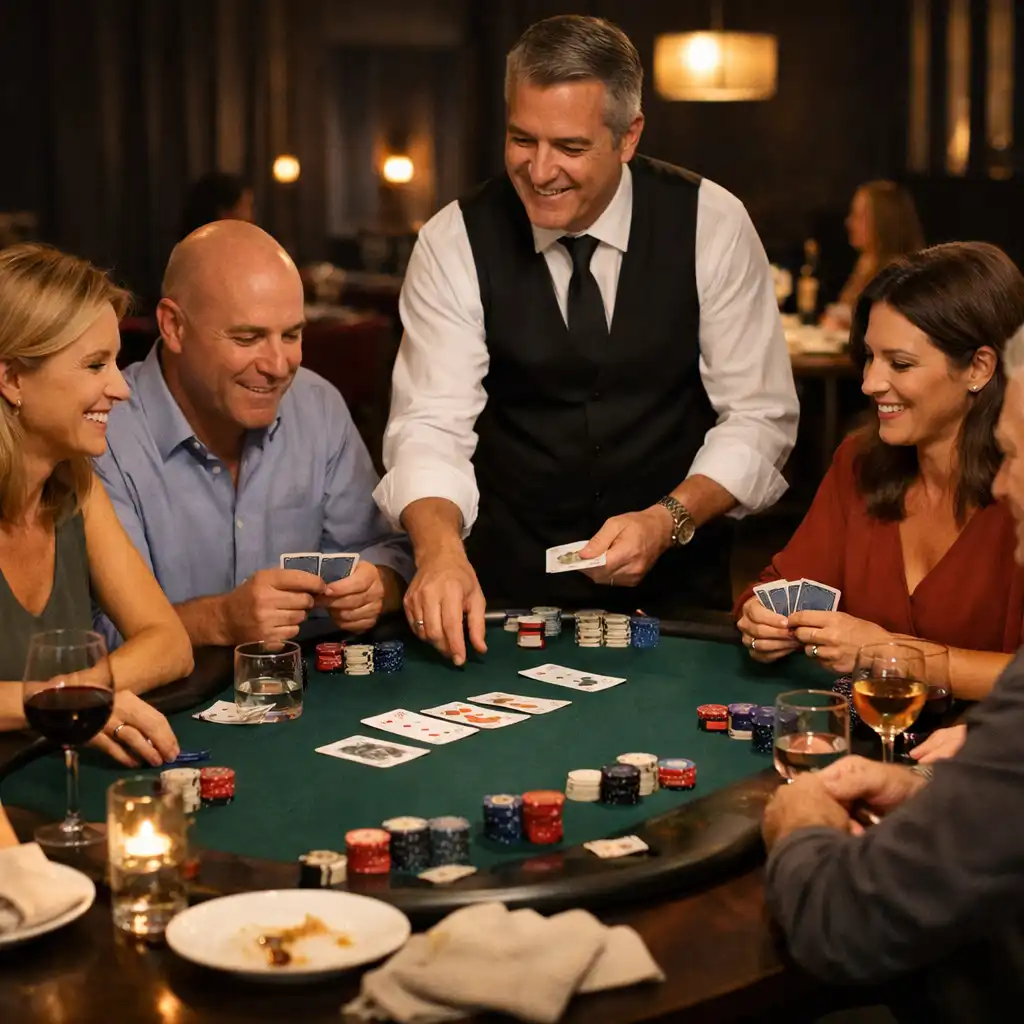
A dealer-led structure gives the table a clear rhythm. It helps participants follow the order of play, shared rules and progression of a hand, while providing a calm point of clarity when a question arises. The role is about hosting the table flow so everyone has room to pay attention.
Participation format

Chip-based participation

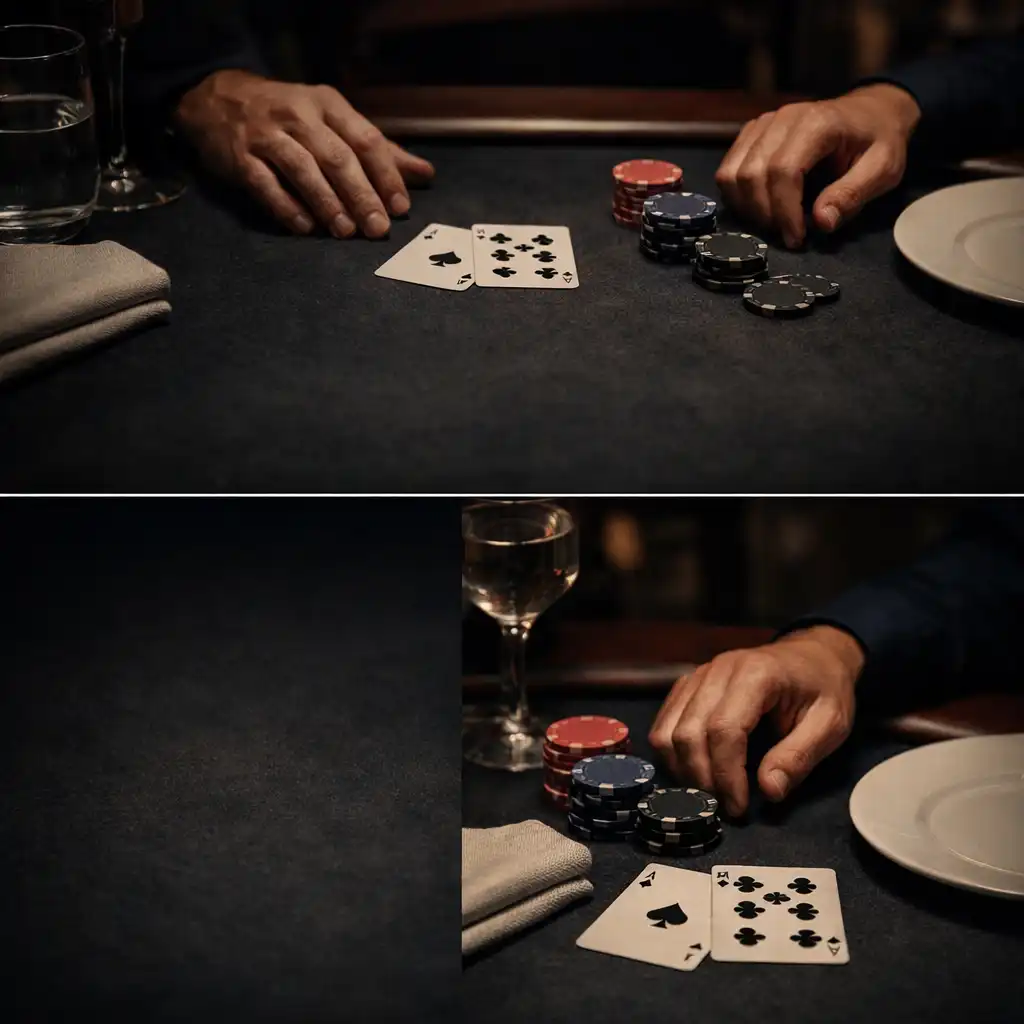
Poker chips and chip buy-in language are used as part of the table participation format. They are practical markers that help guests follow the mechanics of an evening and see what is happening around the table, without turning the experience into a financial conversation.

Shared expectations

Clear table rules

Each poker table works best when everyone can follow the same expectations around turns, cards, conversation and respectful participation. Clear structure is not there to make the room feel strict; it gives guests a welcoming common language for joining the table.

Discover offline poker
Linen, glassware, cards and poker chips arranged on a softly lit restaurant table
A tactile restaurant card room atmosphere at Velvetand Cinder.

A card room with a dining-room pulse

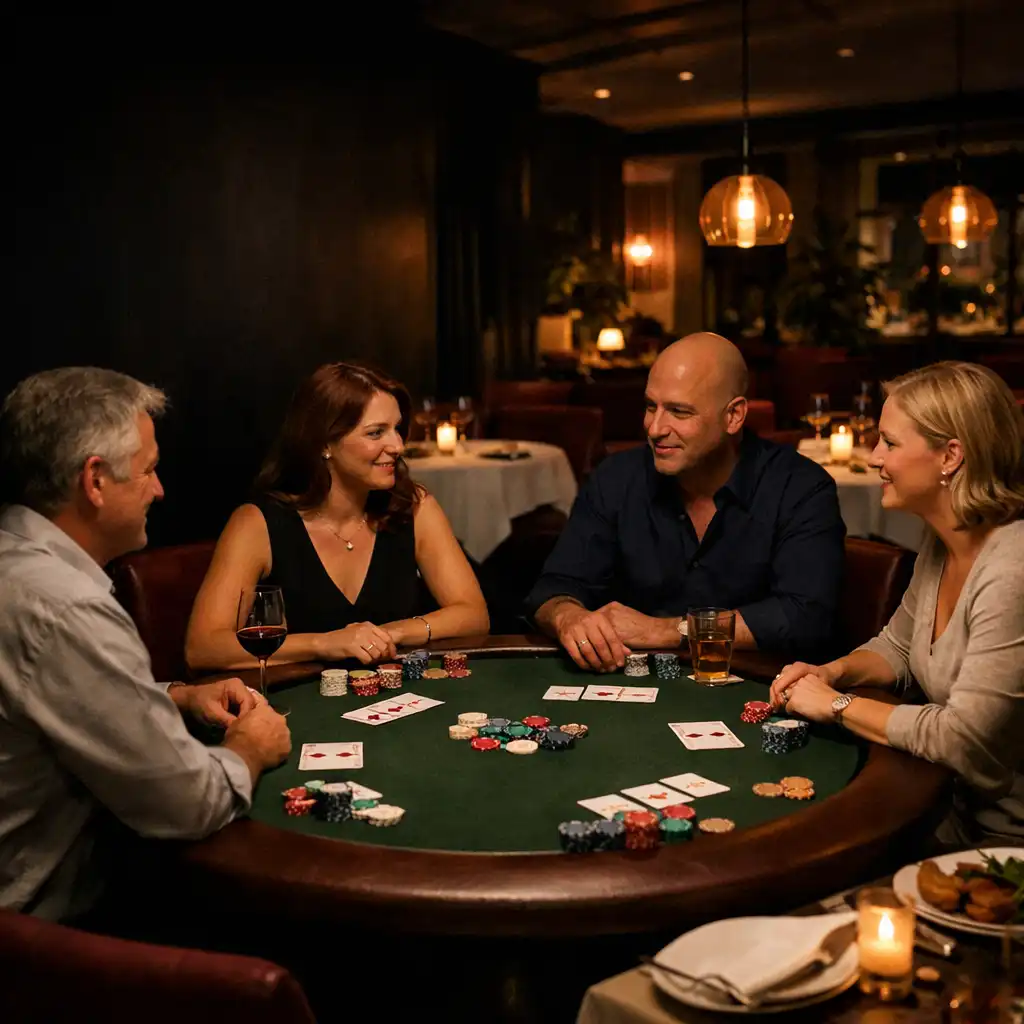
A composed, low-lit room gives offline poker its texture. Linen, glassware, felt-like table colour and attentive conversation sit together in a setting where hospitality remains central. The card room atmosphere is not about spectacle; it is about making a real table feel considered, comfortable and connected to the dining room around it.

Thoughtful play

Read the table, not just the cards

Texas Hold’em has practical ideas worth noticing, but at Velvetand Cinder they begin with observation. Position, timing and reading the table can help a participant understand the shared rhythm without turning the evening into a promise about results.

01 · Position

Position changes the view

Where a participant sits in the order of play can change what they have seen before making a decision. Position is a useful concept to notice over the course of a hand because it invites attention to sequence: whose turn has passed, what information is visible and when a considered response is appropriate.

02 · Timing

Timing makes room for thought

Timing can be as simple as pausing, observing the table’s pace and making space for a considered response. It supports a calm hosted atmosphere by allowing each turn to be clear rather than hurried, while keeping conversation respectful of the group’s shared flow.

03 · Table awareness

Reading the table is social awareness

Reading the table is not about pressure or manipulation. It is about noticing the shared rhythm: who is still learning, when conversation needs to pause, how body language affects comfort and when a clear question helps everyone follow play. This kind of awareness keeps offline poker welcoming, particularly when experience levels differ around the same table.

Table etiquette

A clear table makes room for everyone

Practical expectations are a way of making the room easier to share. They support dealer-led guidance, beginner-friendly introductions and a social evening where dining and poker conversation can coexist with care.

01

Follow the order of play

A clear turn-taking rhythm helps each person know when to act, listen, ask for clarification and keep the table easy to follow. Dealer-led guidance can make the sequence visible without making a simple question feel out of place.

02

Keep cards and chips in the shared rhythm

Cards and poker chips are physical table elements handled carefully and kept visible enough for the group to follow participation. Chip buy-in language belongs to the established format, while courtesy and clarity remain the more important table habits.

03

Ask early if you are new

First-time and returning participants alike can benefit from simple questions and beginner-friendly introductions. Clarity comes before pressure: understanding the table rhythm makes it easier to settle into the room and take part with confidence in the shared format.

04

Respect the room and the people in it

Restaurant poker works best with measured conversation, attention to other guests and consideration for personal space and table comfort. It is an adults 21+ setting where a hospitable tone helps everyone remain part of the social evening.

A hosted format is a shared responsibility. When expectations are clear, guests can enjoy dining, poker conversation and the table experience with a more relaxed sense of place.

Adults gathered around a restaurant poker table with cards, linen and shared dining details

For shared occasions

An evening with a shared centre

Team and group bookings can be a way to gather around a real poker table, combining dining, conversation and a common Texas Hold’em format within one social evening. The idea is exploratory and restaurant-led: a shared centre for a group rather than a promise about capacity, packages or private arrangements.

A format that gives everyone a role

A clear hosted structure can help groups with mixed familiarity levels share the same table rhythm. Returning players and guests trying offline poker for the first time can follow the format together, with beginner-friendly introductions supporting a more comfortable start.

Dining remains part of the evening

Restaurant poker is not separate from hospitality. Food, drinks, table conversation and the room’s pace remain part of the occasion around the cards, giving a group several ways to take part in the social atmosphere.

Poker nights

Poker nights with a considered rhythm

Poker nights are structured occasions that bring table format, hosted guidance, dining and shared social energy into a coherent evening. The emphasis is on the sequence guests experience together, not on a published timetable.

01Format

A planned social format

Structured poker nights bring a table format, hosted guidance, dining and shared social energy into one considered occasion. The restaurant remains the setting and the table becomes a natural centre for conversation, attention and an in-person Texas Hold’em experience.

02Orientation

A clear start to the table

A poker night benefits from an opening orientation so participants can understand the Texas Hold’em format, dealer-led rhythm, poker chips and basic table expectations before play settles in. Beginner-friendly introductions keep the practical details approachable without making the evening feel overly formal.

03Rhythm

Space for decisions and conversation

The middle of an evening balances hands, tactical decision-making and the social exchanges that make in-person poker distinctive. Participants can notice position, timing and the shared rhythm of the table while remaining attentive to the people around them and the room they share.

Responsible entertainment

Participation with care

Choose the pace that suits the evening

Restaurant poker is best treated as social entertainment. Guests can take breaks when wanted, keep personal comfort in view and allow conversation and dining to remain at the centre of the experience. A considered pace supports the room’s hospitality rhythm and leaves space to enjoy the table without making it the only focus of the evening.

Make the table better for everyone 21+

Responsible play also means respecting the dealer-led structure, other participants and the shared room. Ask questions, maintain a considerate tone and step back when needed. Offline poker is a shared in-person activity, and the care each person brings to the table shapes how welcoming it feels for everyone.

Continue the evening

Choose your next seat at the table

Explore Poker Nights for the wider hosted-evening context, or make an enquiry about the Velvetand Cinder experience. Both paths begin with restaurant dining, real tables and a considered adults-only social atmosphere.